Showing posts with label coal. Show all posts

Sunday, February 11, 2018

Seriously, a post about coal in Appalachia and America

post #373
         I discovered a well written, well thought out post this week about coal and Appalachia. It absolutely has to be shared. So, dear readers, this week, for a change, I'm not leaving this article to a link. 
         I'm also sharing a single mountaintop mining removal photo of mine, that I made while in the front right seat of a 4 seater plane during one of the tours organized by Kentuckians for the Commonwealth for writers and artists, initiated with Wendell Berry. The idea was to follow up by using our communication skills to hold this mining practice in a brighter light.
        The airplane window was being held open for me by Mary Ann Taylor-Hall and Ed McClanahan in the two back seats. For me, the experience of viewing a mountaintop removal site felt up close and personal -- the unbelievable made comprehensible. The site is located near Hazard, Kentucky. There are many hundred more sites in the Appalachian Mountains which touch on 13 states.

photo by Ann W. Olson, with pilot and back seat help, 2004
Note: I would be the first to say that the following article appears geeky and hard to read, but the fact that I myself could read it and find it interesting and fair and informative indicates it must not be as geeky as it looks. Believe me. Or maybe I am just a sucker for really well-crafted writing.


Front Porch Blog

5 graphs explain coal in Trump’s first year
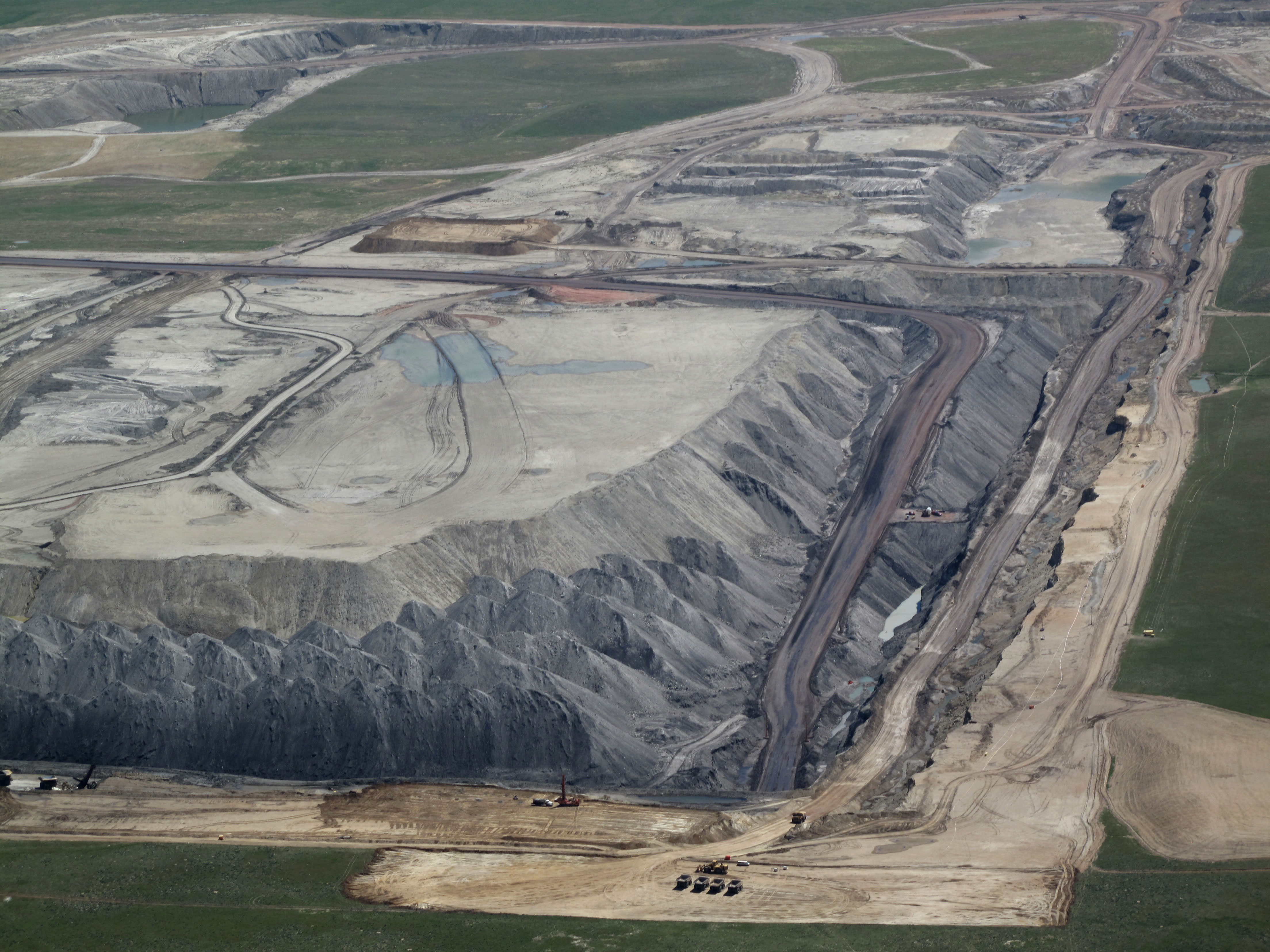
PowderRiver_ArchCoal_BlackThunderMine_Wright-WY_credit-EcoFlight
The Black Thunder coal mine owned by Arch Coal, near Wright, Wyoming in the Powder River Basin. Photo by EcoFlight

This report is the result of a collaboration between Appalachian Voices and the Western Organization of Resource Councils to assess the effect of Trump Administration policies on economic growth in coal-producing regions.       (Blogger Ann's noteHere is the article link if you would prefer it.)

By Colin Lauderdale & Erin Savage

     One year into the Trump administration, the coal industry that the president promised to revive has shown some muted signs of life. Nationwide, coal production ticked up last year for the first time since 2014, and the sector added 1,035 jobs — an increase of 1.9%. (A Reuters analysis using preliminary data from the Mine Safety and Health Administration put the number at 771 new coal jobs in 2017.) The administration claims this uptick as evidence that their anti-regulatory agenda is having its desired effect.
     Unfortunately for Trump and the coal industry, though, 2017 appears to be an outlier in which coal overperformed. The coal industry’s fortunes are tied to market demand, not regulatory actions, and the same factors that have depressed coal demand for the past decade — cheap and abundant natural gas, air quality concerns, and depleted reserves — are as present now as when Trump took office.
Many of the administration’s policy actions in 2017 were aimed at bringing coal jobs back to mining communities. In the name of restoring these jobs, the administration repealed the Stream Protection Rule, initiated repeal of the Clean Power Plan, rescinded a moratorium on new federal coal leases, discontinued a programmatic review of the federal coal leasing system, repealed a rule closing loopholes in federal coal royalties, empaneled a committee of fossil fuel advocates to steer federal mineral royalty policy, announced U.S. withdrawal from the Paris Climate Accord, and canceled a National Academy of Sciences study of the health impacts of Mountaintop Removal mining.
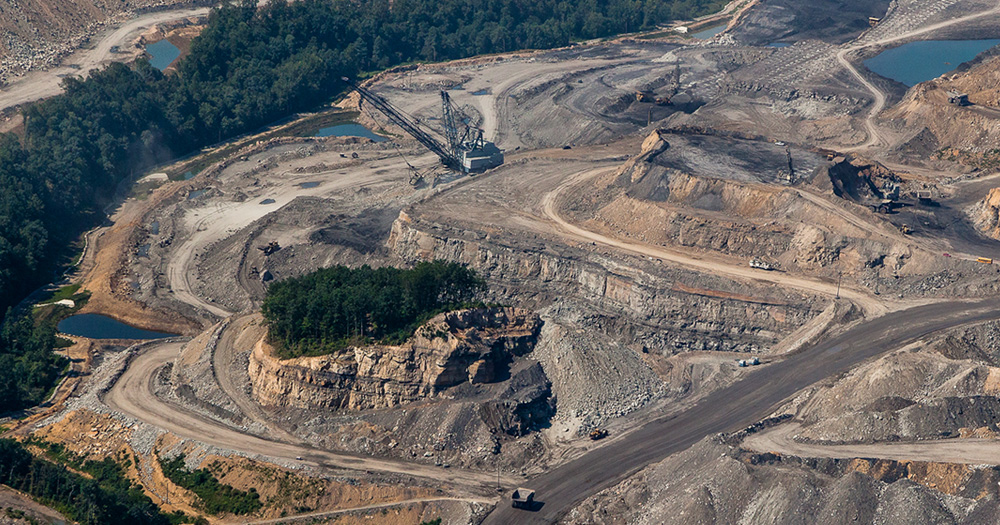

Photo of mountaintop removal mining by Kent Mason
Mountaintop removal mine in West Virginia. Photo by Kent Mason

     Energy Secretary Rick Perry also brought a rulemaking to the Federal Energy Regulatory Commission that would have subsidized aging coal-fired power plants with ratepayer dollars, but the commissioners voted down the plan unanimously.
     These policy decisions have major implications for clean water, breathable air, public health, taxpayer fairness, fair electricity markets, and everyone impacted by global climate change. In addition, the data suggests that these policy actions aren’t likely to reverse the macroeconomic trends that have been working to depress coal’s value and market share.
  
    These five graphs illustrate what happened with coal in 2017 and why the long-term trends in the industry are unlikely to reverse.

1. Production and employment went up, barely
Coal-re-Trump-blog-Feb1-2018-Figure1
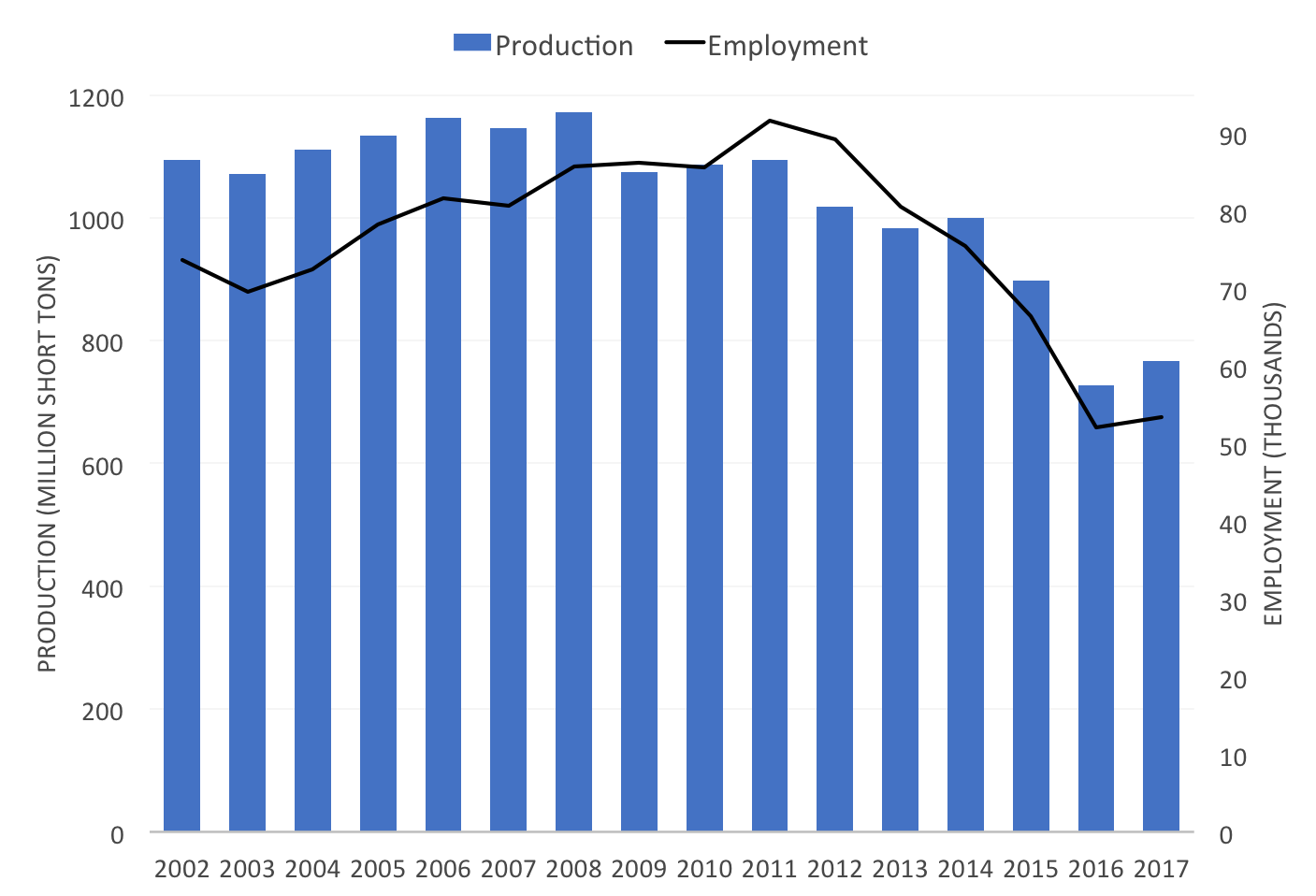
Figure 1. U.S. coal production (million short tons) and employment (thousand workers) 2002-2017. Source: MSHA Part 50, MSHA Open Government Data
     2017 bucked a long-term trend in coal production as coal mining companies sold more tons of coal and employed more miners than the previous year. Both increases were marginal, especially considering that both metrics are about one-third lower today than one decade ago.
     The modest recovery in coal production did not lead to a commensurate recovery in employment. Although coal companies mined and sold about 6% more coal in 2017 (an additional 40.4 million tons) than the year before, they only hired back about 2% of their workforce (1,035 jobs).

2. Mines with fewer workers accounted for biggest production increases
Coal-re-Trump-blog-Feb1-2018-Figure2
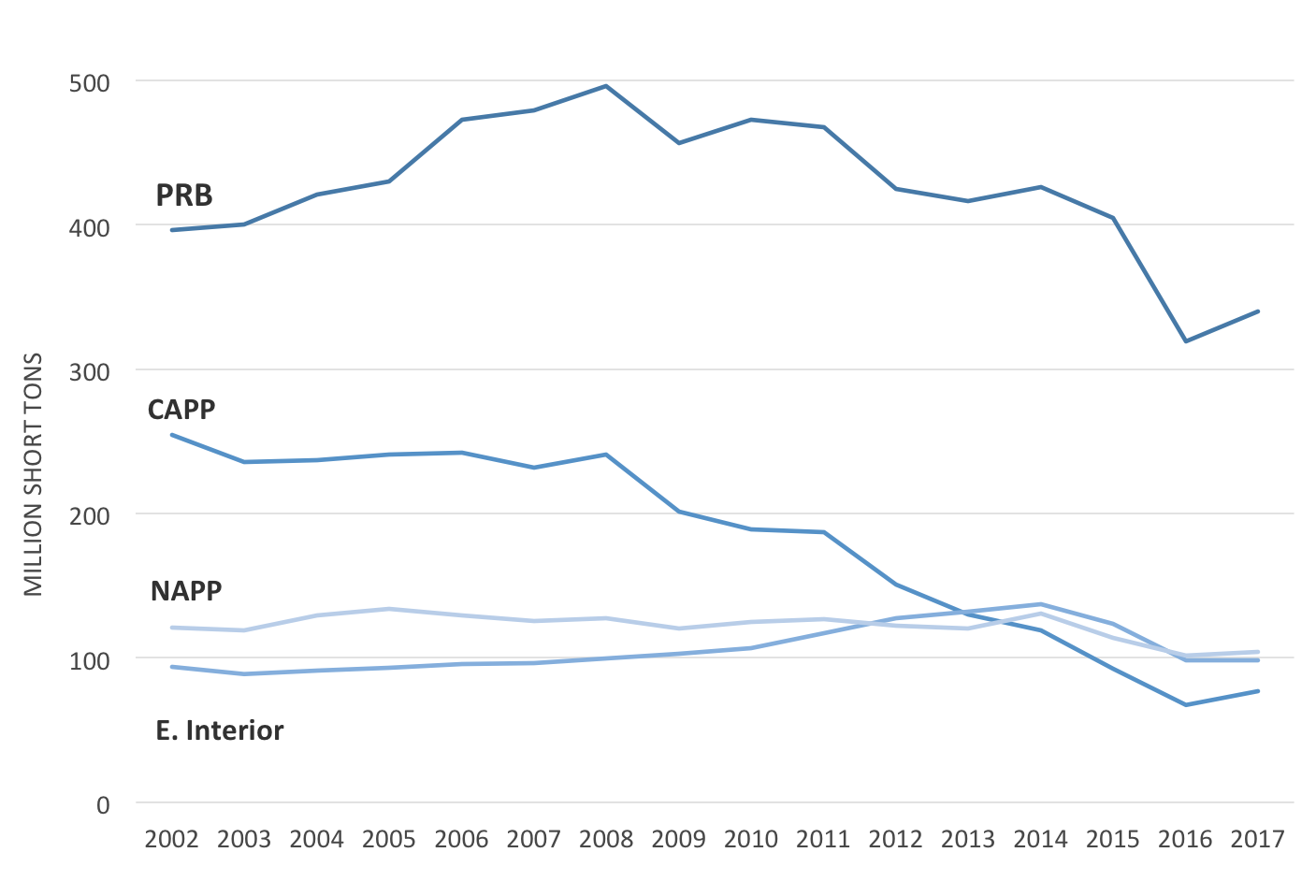
Figure 2. Regional production 2002-2017 (million short tons). Regions represented include the Eastern Interior (E. Interior), Central Appalachian (CAPP), Northern Appalachian (NAPP), and Powder River Basin (PRB) coal-producing regions. Data is preliminary for quarter 4, 2017 and production could increase slightly. Source: MSHA Part 50, MSHA Open Government Data

Almost half the coal mined in the U.S. comes from the Powder River Basin (PRB) of Wyoming and Montana, where large surface mines and thick coal seams allow companies to produce coal with fewer workers than mines in Appalachia and the Illinois Basin. This explains why net gains in employment in 2017 did not keep pace with net gains in production. Despite accounting for 51.9% of the increase in U.S. coal production from the year before, the PRB actually lost about 60 jobs in 2017.

3. Consumption decreased (again)
Coal-re-Trump-blog-Feb1-2018-Figure3
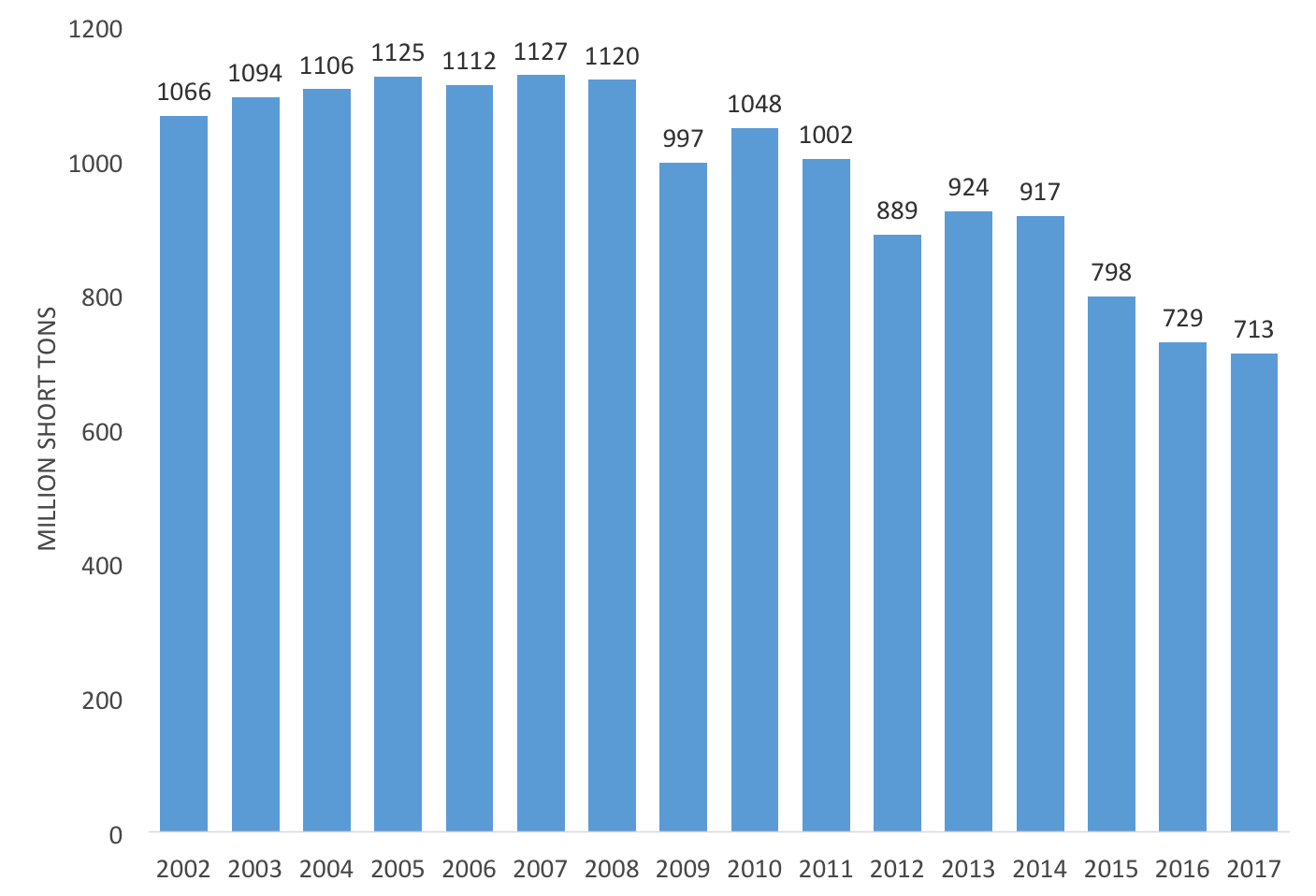
Figure 3. U.S. coal consumption 2002-2017 (million short tons). 2017 consumption estimated by Rhodium Group analysis. Source: EIA, Rhodium Group.

     Despite increases in both production and employment, the long-term trend of decreasing domestic demand for coal continued in the first year of the Trump Administration. Last year was the fourth consecutive year of falling domestic demand and marked a 37% decline from a decade ago. The continued decline comes from the rolling wave of retirements of coal-fired power plants, coal-to-gas switching at utilities across the country, increasing generation from non-hydro renewables, and a complete lack of new coal-fired electricity generation in the U.S.
     This trend is likely to continue. According to the Energy Information Administration, 14 gigawatts of coal-fired electricity generating capacity are scheduled to come offline in 2018, with no new coal generation to replace it. The Energy Department’s short-term energy outlook predicts that 2018 will be the first year in modern history in which coal provides less than 30% of the nation’s electricity.

4. Exports made up the difference
Coal-re-Trump-blog-Feb1-2018-Figure4
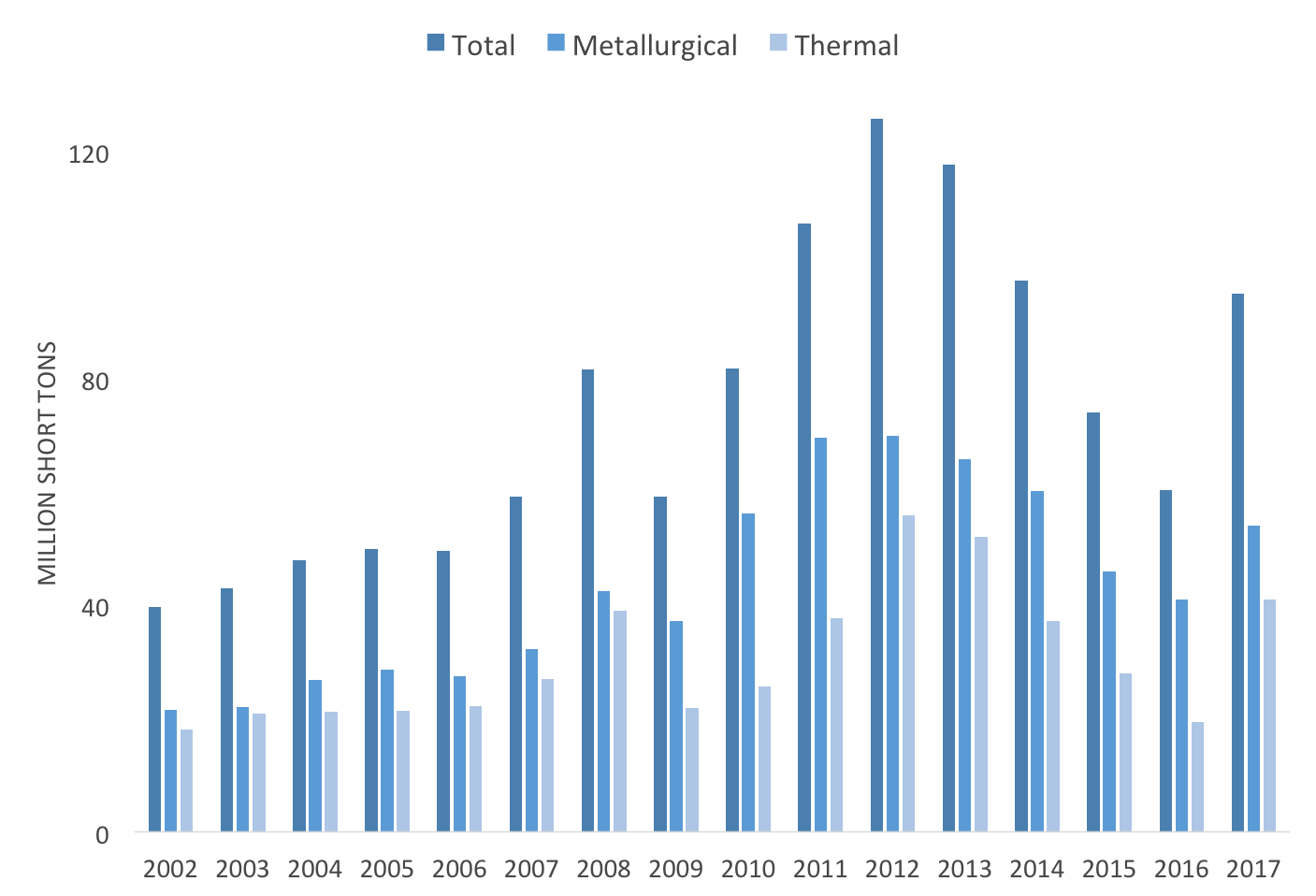
Figure 4. U.S. Coal Exports 2002-2017 (million short tons). Source: EIA

     If mines produced more coal in 2017, but Americans used less of it, where did the excess go? The answer is overseas. Last year saw a spike in coal exports, from 60.3 million short tons to 95 million. In the first ten months of 2017, exports were up 70% over the same period in 2016.
The spike was driven by rising international prices for metallurgical coal (used for steel production rather than electricity) that accompanied strong international economic growth last year. Metallurgical coal shipments accounted for 43% of coal exports in the first half of 2017, with most of the economic benefit accruing to West Virginia producers.
     Exports of steam coal for electricity also increased due to seemingly temporary factors in the Pacific Rim. The Asian market for coal swelled as China, the world’s largest coal consumer, increased imports while decreasing domestic production due to safety inspections and closure of inefficient Chinese mines. U.S. producers were able to grab a portion of this market after Cyclone Debbie shut down coal mines and railways in Australia, effectively halting Australian exports that usually crowd out American coal in the region.

5. Coal companies stopped pursuing 1.97 billion tons of new federal coal leases
Coal-re-Trump-blog-Feb1-2018-Figure5
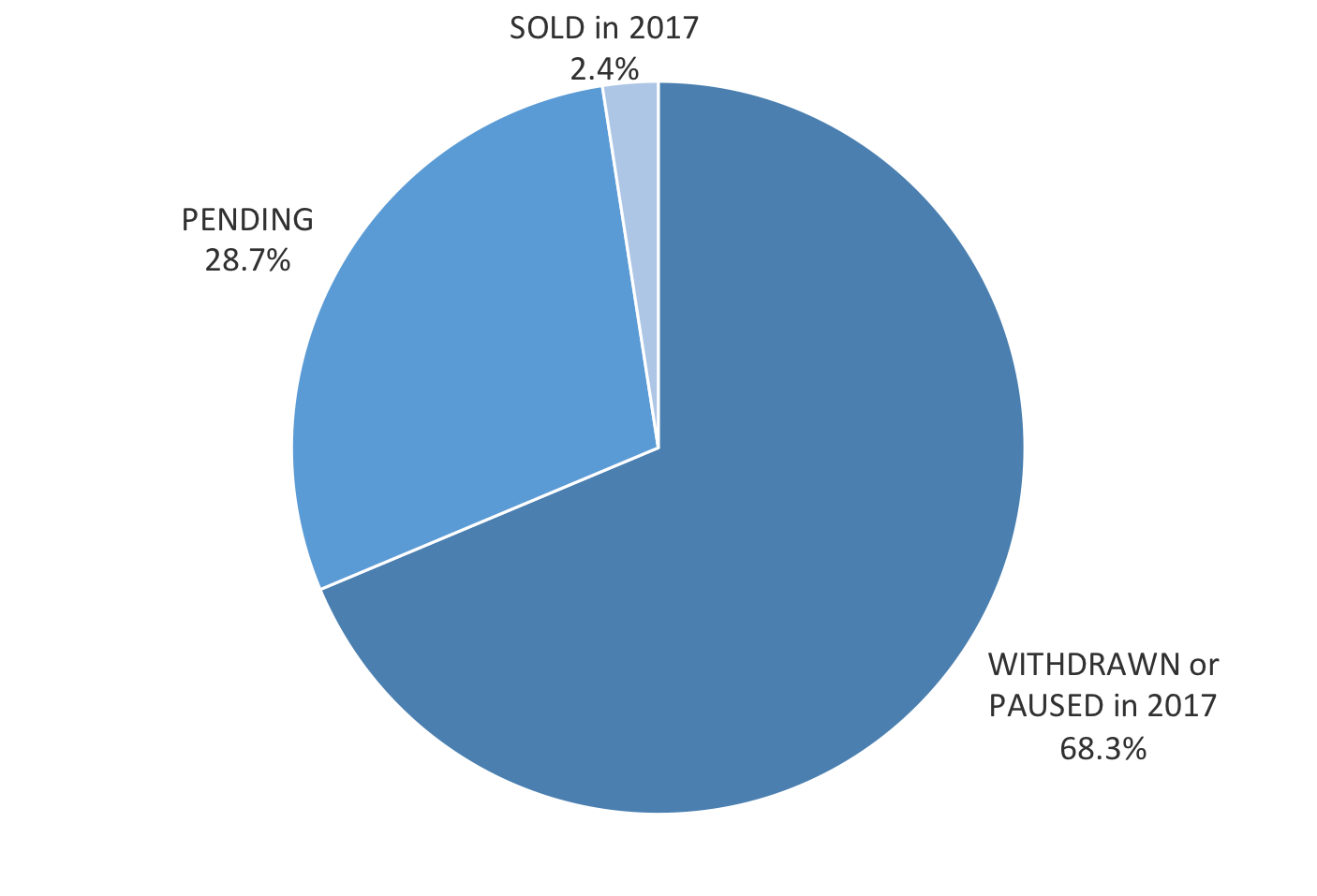
Figure 5. Current status of federal coal leases pending before Trump took office. Leases are considered “paused” when a company has (i) requested that the Bureau of Land Management (BLM) stop processing the lease, (ii) failed to provide additional information or payment required for BLM to process the lease, or (iii) not responded to BLM inquiries about continuing to process the lease. Source: Bureau of Land Management, LR2000

     Early in 2017, the Trump Administration terminated two policies implemented by the Obama Administration in January 2016: a top-to-bottom review of the financial and climate implications of the federal coal leasing program, and a temporary moratorium on new major federal coal lease sales. Interior Secretary Ryan Zinke ended both the review and the moratorium with a Secretarial Order last March, declaring that both had prevented the coal industry from flourishing.
     Coal owned by the federal government accounts for over 40% of U.S. production. There was almost 2.9 billion tons of federal coal pending when Trump took office. Since then, only three federal coal lease sales have occurred, accounting for about 60 million tons, or 2.4% of the tonnage pending. All three leases would have been allowed under both of the terminated Obama-era policies.
Almost 70% (1.97 billion tons) of the tonnage pending has been withdrawn or put on hold by the companies that asked BLM to sell the coal in the first place. These actions are a clear indication that the coal industry, at least, doesn’t believe that the minor uptick in production in 2017 is the beginning of a rebound in coal’s long-term prospects.
      In addition, last year saw one new 640-acre request for a federal coal lease in North Dakota, as well as relinquishment of a 5,226-acre parcel previously leased in Wyoming.

Conclusion

     Although we share the president’s intention to bring economic prosperity to coal-producing regions, we believe his strategy of de-regulating coal mining and burning is unlikely to produce the forward-looking economic prosperity that coal regions need. The economic headwinds facing the coal industry are the result of competition from less expensive energy sources, depleted coal reserves that are more expensive to mine, growing consumer and business demand for cleaner sources of energy, and a carbon-constrained world. Until the administration is able to solve these problems, doubling down on the economic potential of the coal industry is a poor policy for promoting economic growth.
     Coal communities deserve policies that take advantage of the coal regions’ existing assets; ensure the strongest possible standards for reclamation bonds; focus on creating new, sustainable, and diverse local economies; recognize mine reclamation as an economic opportunity; and preserve the benefits and respect that coal miners and their families have earned over generations of hard work powering our country.

Colin Lauderdale is the Washington, DC Representative for the Western Organization of Resource Councils.

Sunday, January 8, 2017

favorite photos, 2016, part 3 of 3

post #318
       Cold weather -- time for warm memories and final favorite photo moments from 2016:


  I am doing pairs of photos today.  I so often want to tell a story through what I see.
 
my neighbor's house, across the road, near the mailbox

Clyde's apple orchard and garden, from the curve along Hogtown Ridge
 
     Two sets of paired photos from September's 4H event in Sandy Hook:

Jayla won the grand prize later, but I chose this earlier photo because it shows her in action.

I don't personally know this young girl, but this is my favorite photo from that afternoon.

Again, congratulations to all the hard working students taking part in 4H!!


 These two photos are from my two days in London, where I met up with a close friend from Norway after spending some time with my step-mother in Chipping Campden. We had walked under the ferris wheel before crossing the River Thames headed toward the famous clock tower, Big Ben, on the parliament building. The English sky makes these photos work for me! Love that light!

The next two photos pay hommage to the wonderful woodstove that had been left in our house when we bought our land 45 years ago. Such a wonderful companion in any kind of cold weather!  I made these photos last winter but the stove is in use today, for sure.


       I can't stop myself from ending with a few brief words about our future as the clamor for PROFIT NOW gets louder, while the call for taking care of our one and only earth for our children's children gets drowned out.  Clean water, clean air, and healthy forests are clearly threatened by a pervasive lack of backbone. (I definitely don't get it how anyone can deny the reality of our part in the warming of the world.)  Saying coal jobs can come back is like that fairy tale "The Emperor's New Clothes."  Read it and weep. At the least, in the face of double think, take time to figure out what might be true even though it is outside some random comfort zone.
       I am grateful for Kentuckians for the Commonwealth (KFTC.org).  They are not backing down from advocating Clean Power and a healthier and more economically sound future for our state. I congratulate them, too, for reaching their 2016 fundraising goal of $500,000! Let's take time to celebrate how far hard work has brought us even though the job is far from finished.


Sunday, April 13, 2014

loving getting out and about in eastern Kentucky

post #185
        Last weekend's trip to southeastern Kentucky took place during the brief time between the snows of this long winter and the coming of leaves on the trees.  So all the driving I did on back roads was 1) not treacherous and 2) showed more of the bare bones of the region than one usually sees.  Of course I love stopping along the way to take photos or explore, even if I am running late.  My modus operandi seems to be that you never know what you can see if you take the time to look closely!  
        Thanks to those "oblivious to the terrain" cell phone directions, I ended up on a new-to-me road that turned out to be gorgeous but empty, with not even any houses.  It included some high-up curves I wasn't expecting, a thrilling rushing mountain stream, and absolutely no traffic.  Just me and my adventure.  Had I not been running quite as late as I was, I would have taken more photos.  


There's no other place to stop to take the photo!

      I think I was in Leslie County at that point, but on the way home two days later, I modified the route somewhat. The following photos are in Letcher County.  I think.  In Kentucky and much of the south, counties are all important.  The stream may be in both counties.  
      Near Delphia I stopped at a cemetery I had visited several years ago.  I sat on the hillside, being discreet about my camera, and took photos in front of me, to the right of me and also across the road.  I never mean to appear disrespectful, and I am not.  But it's true that the bumper sticker on the back of my car does say "I have been to the mountaintop and it wasn't there."  Another bumper sticker says EARTH.  Oh, and then there is the Obama bumper sticker, mostly faded after 6 years of wear.


This time there is a place to pull over.

      On the way home, I hoped to find again a scene that had gotten my attention, since I didn't have time to take a photo of it on the way down.  I am showing two views. I love this tree that is longer than the trailer it adorns. The dead stuff on the hillside is kudzu, not yet come back to life to take over the place.  There are several houses across the street, so I didn't linger.  Plus I was running late as usual....


      While I was at the Pine Mountain Settlement School, I took a few photos to share here, the first two with my cell phone!  I do NOT recommend this.  The other flowers and fauna I have tried are not this good.  I think these first two photos are simply sort of a miracle.  


spring beauties (an appropriate name!)

This yellow trout lily was the first flower of a great many in the area.  I used my body to make the shade so that there would be way less washed-out contrast in the photo.

the stream at the school, photo made with my Canon

   This last photo is from our yard.  It is current and I just wanted to show it off:


Sunday, February 9, 2014

Winter still, but not forever!!??

post #176
         I am definitely distracted by the weather, thinking of people everywhere who might be cold without electricity, wondering what the next storm will bring, and still hoping that it won't be just the bad bugs left to greet us come spring and summer.  On the ridge, my neighbors have their electricity back, and the repaired water generators are providing water.  The trees and bushes are slowly standing straighter as the ice load lightens.  Today I am including a few winter views I made photos from in the past week, but I want to start with a moment of regular life from last weekend -- an event at our local independent bookstore!
       George Ella Lyon came from Lexington to do a reading from her newest book of poems, Many-Storied House (University Press of Kentucky, 2013.)  She had a good crowd, at CoffeeTree Books in Morehead.  It was so nice to see her.  And hear her.  I think these  poems are some of her best, which is saying a lot.


       So, on to the driveway, the view from the kitchen window, and such:
    

the sycamore tree in our yard

two cardinals -- look closely

this morning
A flock of robins came through early in the week!

      On the political front, this is the week for the annual I LOVE MOUNTAINS day, at the state capitol.  It will be cold but not stormy, so I hope at least 1000 of us can flock to Frankfort on Wednesday.  Here is the link to learn more about it.   I am sure I will take photos while I am there.  It is sad to think we have to go year after year to stick up for our beautiful mountains and for the health of the people in live among them.  What are we going to do about having fewer and fewer forests left to provide for us?  What about the essential nature of clean water?  It is too easy to blame Obama or the EPA for dimishing coal jobs, but the reality is much more complex.  It's a lot about jobs, of course, but coal is no longer in a position to be the hero.  May I repeat the truth that the coal counties of eastern Kentucky have been the poorest counties in the state, with the greatest number of health problems, yet coal was supposed to have been providing prosperity.  To whom.

      I'm finishing up this post today with two cousins on one of multiple recent snow days!  (Technically, they are first cousins once removed.)  I hope the schools are able to open this coming week, somehow, at least for a few days.  Good luck to everyone!

Sunday, February 19, 2012

I Love Mountains Day, an annual reminder in Frankfort

post #73
     which sadly means there is still the need to increase awareness of the urgency for clean water and air for the people who live in coal areas, and to mine coal in less destructive ways.  No one is saying coal doesn't need to be mined, but let's be visionary about how to do it better and cleaner.  The truth is WE ALL LIVE DOWNSTREAM
      I did take photos again this year, grateful that it wasn't raining as hard during the afternoon rally and march as it had been all morning during the drive there!   Even so, since I was wary of getting my faithful Canon camera wet, I did resort sometimes to my newish point and shoot designed for underwater.   However, inadvertently, its light setting was inaccurate....  The Yea and Boo story of that is how I end up learning something every time I shoot!!

      So here are some photos:  rally first on the steps of the Kentucky Capitol building, several speakers, music, and then a march around the Capitol to the front of the Governor's Mansion.  The Kentuckians for the Commonwealth (KFTC) estimates there were 1200 of us on this cold Valentine's Day. 

A great number of young people were there,
     
and older people


and families


and two ageless friends of mine, Kris and George Ella!


This speaker, Melina Laboucan-Massimo, is from the Cree First Nation in northern Alberta, Canada.  With great eloquence she shared her community's efforts to stop the devastation from the tar sands extraction going on there.  This includes sharing how tragic the building of the Keystone XL pipeline would be.  


Randy Wilson addresses the crowd, emphasizing that what we do to the land, we do to the people.


I include this photo as a tribute to Patty Wallace, in the red coat, for continually speaking up for justice in her home county in eastern Kentucky and for her years of sharing her sense of urgency with legislators in Frankfort.  She is an inspiration to us all.


marching around the Capitol


Yes!

If Governor Beshear was at home, he didn't come out to speak to us, either here or during the earlier rally at his workplace.  However, Senator Kathy Stein did speak to us at the rally, giving us her full support as citizens speaking up on a crucial issue.


 KFTC's indefatigable Teri Blanton is on Sen. Stein's left, and Sylvia Ryerson, with WMMT in Whitesburg, KY, on the right.  THANK YOU ALL.


    note: Since this is a photography blog, I want to share that the only photo I changed a person's location for was the one with my favorite sign, Clean Coal is like Dry Water.  Its designer was in the march, which was moving, and I really wanted a good photo, so I asked her to step out of the march briefly, which she did.  It is too hard making a photo of a moving target while running to keep up.  (Setting up in one location and taking what comes by is equally risky.  Might miss something.)  For an occasion like Tuesday's, I prefer seeing what I can find without a lot of manipulating, but sometimes I get a strong vision of what I want to be sure to record in itself.  Then I can't resist asking.

          FOR MORE INFORMATION ABOUT MOUNTAINTOP REMOVAL MINING, check out I LOVE MOUNTAINS.org